Quick answer: The private pilot oral exam is the ground part of the US checkride. The examiner tests your knowledge and risk management against the Private Pilot Airman Certification Standards (ACS, FAA-S-ACS-6C), mostly through realistic scenarios rather than memorised answers. The best preparation is to use the ACS itself as your checklist. For each Task, explain the rule, why it matters and what you would do in a scenario. Out loud, with someone asking follow-up questions. Start with the subject codes listed on your knowledge test report, because the examiner must test those.
Student pilots ask “how do I study for the oral?” again and again, and the answers that work have the same thing in common: stop memorising and start explaining. This guide shows how the Federal Aviation Administration (FAA) tells examiners to run the oral, and how to turn that into a study plan. It is part of our complete guide to passing the private pilot checkride or PPL skill test. For UK readers, the PPL skill test has oral questions in Section 5 rather than a separate oral exam. Our UK PPL skill test guide covers that.

How the oral exam actually works
The ACS is split into Areas of Operation, then Tasks. Each Task lists three kinds of element: Knowledge (K), Risk management (R) and Skills (S). Every element has a code. For example, PA.I.C.K1 means Private Airplane (PA), Area I (Preflight Preparation), Task C (Weather Information), Knowledge element 1 (sources of weather data).
Appendix 1 of the ACS tells the examiner what to test. For each Task they don’t have to test every element, but they must include:
- Any element you got wrong on the knowledge test.
- At least one knowledge element.
- At least one risk management element.
- All skill elements, unless the Task says otherwise.
The ACS also says examiners should test your ability to apply and link information, using rote questions only where they fit the material. The examiner must build a plan of action with scenarios covering as many Tasks as possible, and the oral questioning carries on during the flight. In practice, expect “You’re planning this trip tomorrow. What would make you cancel?” more often than “Recite the definition of…”.
Start with your knowledge test report
Your Airman Knowledge Test Report (AKTR) lists the ACS codes for every question you got wrong. Under 14 CFR 61.39, your instructor must endorse that you’ve shown satisfactory knowledge of those subjects before the checkride, and the ACS requires the examiner to test them. Look up each code in the ACS, write the element out in full, and make those your first study topics.
What Area I covers
Most oral time is spent on Area of Operation I, Preflight Preparation. For a landplane its Tasks are:
| Task | What to be ready to explain |
|---|---|
| A. Pilot qualifications | What your certificate allows, currency and medical requirements, and when you’re legal to act as pilot in command (PIC) |
| B. Airworthiness requirements | Required documents and inspections, flying with inoperative equipment, and airworthiness directives |
| C. Weather information | Weather sources and products, reading reports and forecasts, and go/no-go and divert decisions, including personal minimums |
| D. Cross-country flight planning | Your planned route, fuel, alternates, charts and electronic flight bag (EFB) use |
| E. National Airspace System | Airspace classes, entry requirements, weather minimums and special-use airspace |
| F. Performance and limitations | Weight and balance, take-off and landing performance, and density altitude |
| G. Operation of systems | Your aircraft’s engine, fuel, electrical and flight instruments, and what to do when they fail |
| H. Human factors | Hypoxia, spatial disorientation, fatigue, alcohol and medication, and aeronautical decision-making |
Other Areas, such as airport operations, navigation, emergencies and night operations, also have knowledge and risk elements that can come up on the ground or in the air.
A study method that works
- Print or download the ACS. It’s free from the FAA. Tick off each Task as you go.
- For each Task, answer four questions out loud: What’s the rule or procedure? Why does it matter? What would I check before flight? What would make me delay, divert or cancel?
- Teach it. Explain each topic to a friend, a family member or an empty room. Wherever you start waffling, you’ve found a gap.
- Use your own aircraft and your own route. Know your POH numbers (speeds, fuel capacity, limits) and plan the cross-country your examiner asks for in full.
- Do mock orals. Ask your instructor, and ideally a second instructor, to run a scenario-based mock oral on your weakest Areas. Pause recorded mock orals online and answer before the student does.
- Tab your references. Know where things are in the Federal Aviation Regulations and Aeronautical Information Manual (FAR/AIM), the Pilot’s Operating Handbook (POH) and the Chart Supplement, so you can find an answer rather than guess.
Free download: our Checkride and Skills-Test Prep Checklist includes a document list and a week-by-week plan you can print.
Common scenario questions to practise
These are typical of the scenario style the ACS describes. Practise answering each one in your own words:
- “The vacuum pump fails before take-off. Can we still go?” (inoperative equipment, Task B)
- “The forecast shows a cold front arriving by mid-afternoon. Do you go, and what would make you turn back?” (weather and personal minimums, Task C)
- “It’s a hot day at a high-elevation airport. How does that change your take-off?” (density altitude, Task F)
- “You want to fly through Class C airspace on the way. What do you need?” (airspace, Task E)
- “You’ve had a cold and took medicine last night. Are you fit to fly?” (human factors, Task H)
Airspace and radio questions often come together. Our guides to how pilots talk to air traffic control and runway markings, signs and lighting are useful revision.
On the day: how to answer well
- Answer the question asked, then stop. Long, unprompted lectures invite more questions on things you’re less sure about.
- Say “let me check” when you need to. Then find it in your references. That’s what a safe pilot does.
- Talk about decisions, not just facts. “I would cancel because…” shows the risk management the ACS asks for.
- Stay calm if you get one wrong. The examiner samples elements and looks at your overall mastery. Our checkride nerves guide has more on staying composed.
FAQ
How long is the private pilot oral exam?
The FAA doesn’t set a length. It depends on the examiner, the scenario and how your answers go, and oral questioning continues during the flight. Ask your examiner what to expect when you book.
Can I use my notes or books during the oral?
Knowing where to find information is part of good airmanship. Bring your FAR/AIM, POH and charts, and ask your examiner what they allow before you start. Don’t rely on reading answers out instead of understanding them.
Does the examiner have to ask about my knowledge test mistakes?
Yes. The ACS requires the examiner to test any elements you were shown to be deficient in on the knowledge test, using the codes on your test report.
Is the oral harder than the flight?
It varies from person to person. Some students find the oral more nerve-racking because it’s open-ended. Scenario practice out loud is the most direct way to make it feel routine.
Sources
- FAA: Private Pilot for Airplane Category ACS (FAA-S-ACS-6C), including Appendix 1
- FAA: Airman Certification Standards (current versions)
- FAA: ACS Companion Guide for Pilots (FAA-G-ACS-2), Section 2, Airman Knowledge Test Report
- eCFR: 14 CFR 61.39, prerequisites for practical tests
- Reddit r/studentpilot: student discussions on oral exam preparation (2026), used for the questions people ask, not for facts
Further reading
- How to pass your private pilot checkride or PPL skill test
- Checkride nerves: how to stay calm on test day
- Failed your checkride? What happens next
- How to become a private pilot
The Aviatorfinds Team
ACS details checked against FAA-S-ACS-6C and FAA-G-ACS-2 on 17 November 2026. The study method and sample scenarios are our own suggestions, not FAA material.
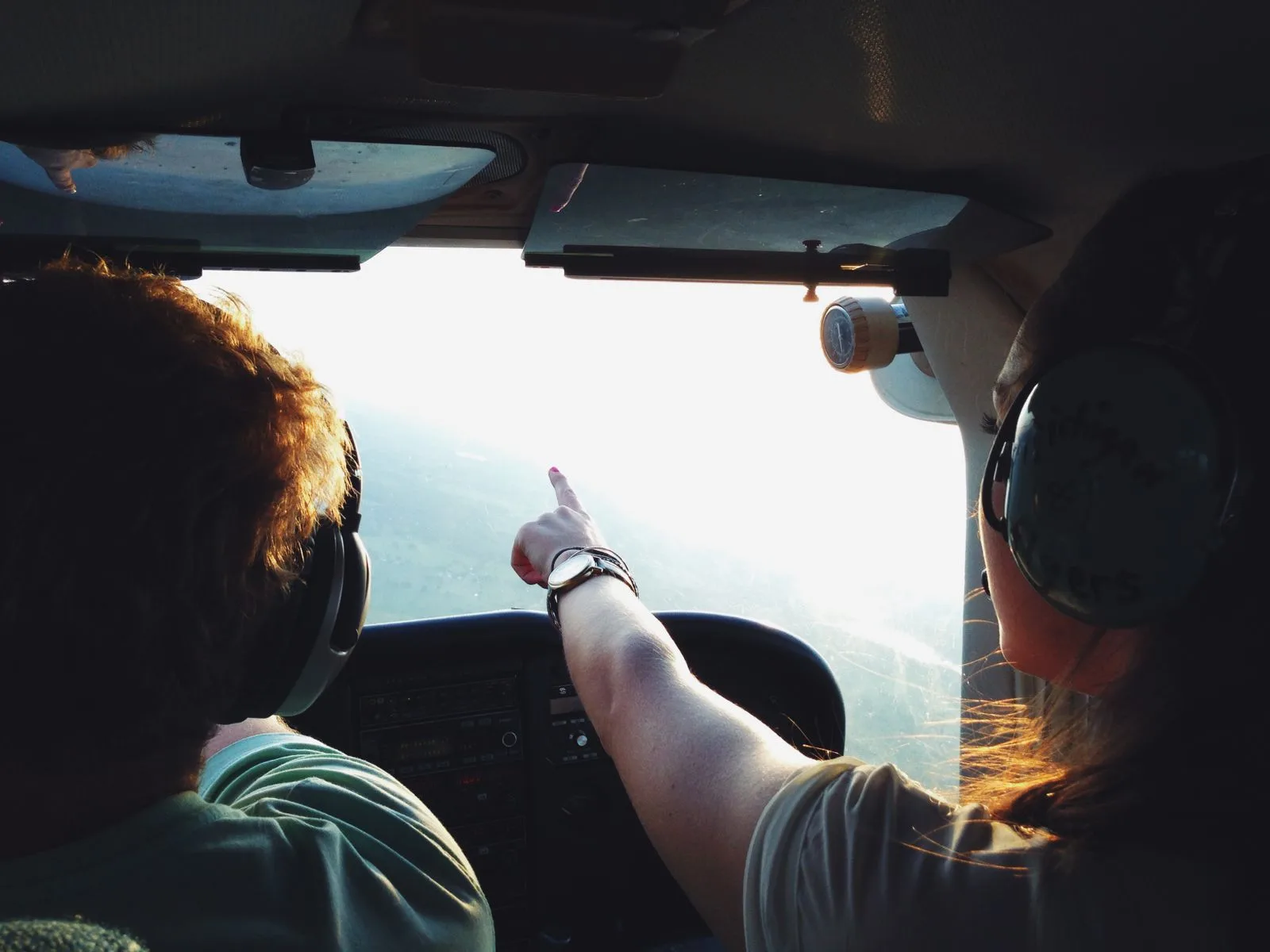
Photo: “Flight check” by victor dubugras on Pexels (Pexels Licence), cropped.