Advertisement – Recommended Aviation Gear

- FIVE STAR COMFORT: Embark for every journey sporting maximum comfort. Our over the ear headphones are constructed for a …
- FIVE BY FIVE COMMS: We understand reliable communication is key for safety. Our noise canceling headset with a microphon…
- EXCEPTIONAL QUALITY: Invest in your future. Aviation headsets for pilots are essential aviation tools that should be bui…
Quick answer: For your first lessons you need very little: your school will usually lend you a headset and provide the aircraft documents. As you progress, the essentials are a headset, a pilot logbook, a kneeboard, a flight computer and plotter, current charts or an approved app, non-polarised sunglasses, a torch with a red light, and a bag to carry it all. Add a carbon monoxide detector, which the UK CAA has required since January 2025 for piston aircraft carrying passengers who are not pilots.
Walk into any pilot shop and it is easy to spend a small fortune before you have flown solo. Most of that kit can wait. This checklist explains what a student pilot actually needs, when you need it, and what the FAA and UK CAA say about the items that matter for safety. It is the hub for our pilot gear guides, so it links to our more detailed reviews where we have them.
If you are still working out your budget, read how much flying lessons cost first, and our guide on how to become a private pilot for the bigger picture.
Prefer to try before you buy? Browse Pilot Gear & Aviation Shops in the AviatorFinds directory, or ask your flight school or club what they stock and lend.
What you need, and when
| Stage | What to have | Why |
|---|---|---|
| Trial lesson and first few lessons | Nothing essential. Sunglasses, a notebook and a pen help | The school usually lends a headset |
| Regular lessons | Headset, logbook, kneeboard | Comfort, hearing protection and keeping records |
| Navigation and theory | Flight computer, plotter, charts or an app | Planning cross-country flights and exam questions |
| Before solo | Medical certificate, ID, your own checklist | Legal requirements and good habits |
| Before you carry passengers (UK piston aircraft) | Active carbon monoxide detector | Required by CAA Safety Directive SD-2024/001 |
| Any time | Flight bag, torch with a red light | Organisation and dusk or night checks |
Buy in this order and you spread the cost over your training instead of paying for everything up front.
1. A headset
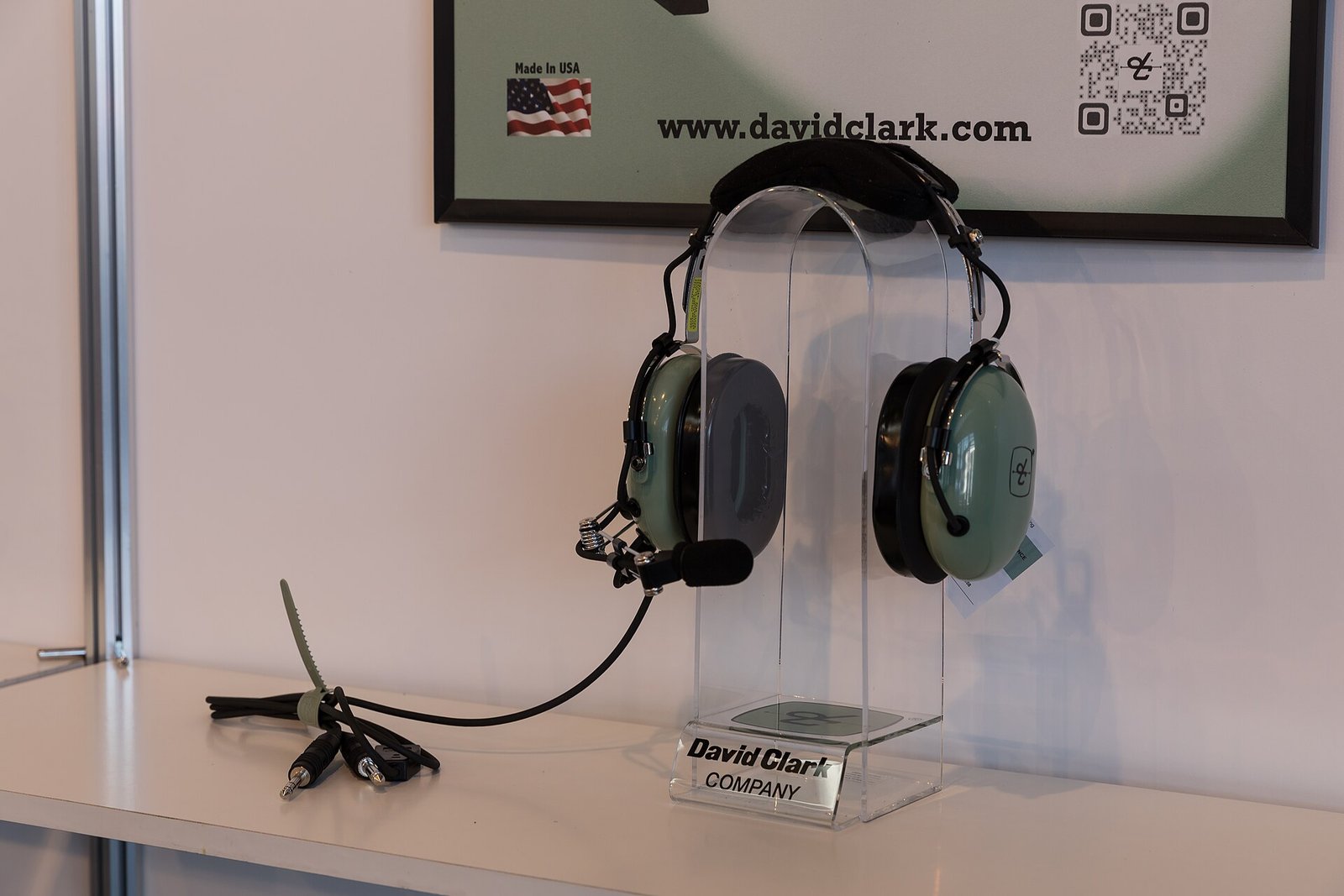
A headset is the one item every student pilot ends up buying. It protects your hearing, cuts fatigue and makes radio calls far easier to understand. The FAA’s pilot safety brochure on hearing and noise in aviation notes that unprotected exposure to steady noise above 90 dB, even for a few hours, can cause hearing impairment, and that repeated exposure can make it permanent.
There are two broad types:
- Passive headsets block noise with a tight seal and dense ear cups. They are cheaper and very durable, and many schools use them.
- Active noise reduction (ANR) headsets use electronics to cancel low-frequency engine noise. They are more comfortable on long flights but cost much more.
Most students start with a good passive headset and upgrade later. Check the plug type your school’s aircraft use before you buy: most light aircraft use twin GA plugs, but some newer aircraft use a single six-pin socket.

- Bundle Savings: This headset comes bundled with a Single Headset Bag providing exceptional value
- Comfort Features: Super-soft double-foam headpad and undercut gel ear seals provide exceptional comfort during long flig…
- Noise Reduction: Features impressive passive noise reduction rating of 23 dB for enhanced audio clarity
For a deeper comparison, read our guide to aviation headsets under $500.
2. A pilot logbook
Your logbook is your legal record of flight time and training. In the US, 14 CFR 61.51 sets out what must be logged and requires a student pilot to carry their logbook on solo cross-country flights. In the UK, Part-FCL requires every pilot to keep a reliable record of their flights and to present it when asked by the CAA.
A paper logbook is still the norm for students, because instructors sign it to record training and endorsements. Many pilots also keep an electronic logbook as a backup. If you train in the UK, ask your school which format it prefers, as some UK schools issue their own logbook.

3. A kneeboard
A kneeboard straps to your thigh and holds your flight log, checklists and notes where you can reach them without letting go of the controls. A simple clipboard-style kneeboard is enough for training. Later, you may want one that holds a tablet.

- VFR PILOT KNEEBOARD: Durable brushed-aluminum kneeboard creates a stable writing surface for flight notes while keeping …
- BUILT-IN VFR QUICK REFERENCE: Includes VFR ceiling, visibility and cloud-clearance information, cruising altitudes, comm…
- STRONG METAL CLIPBOARD: Wide 4-3/4-inch metal clip securely holds charts, checklists, flight plans, notes and other nece…
4. A flight computer and a plotter
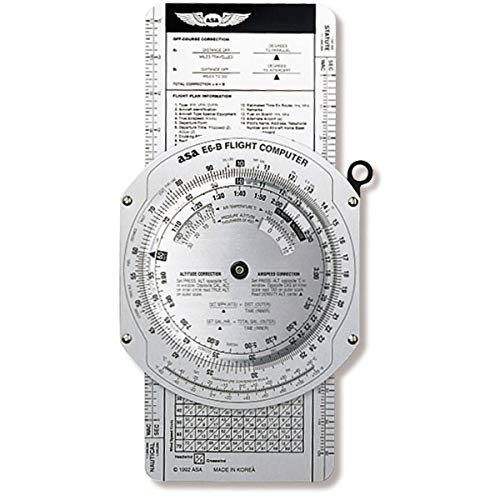
Even in the age of apps, student pilots still learn to plan with a flight computer (often called an E6B) and a plotter. You use them to work out headings, wind correction, groundspeed, time and fuel, and you will meet the same calculations in the navigation and flight planning theory exams. Ask your school which models it teaches with, and check what is permitted in your exams before you buy.
A plotter measures distances and track angles on your chart. Make sure the scale matches the charts you use: UK students mainly use 1:500,000 charts, while US students use sectional charts.

- Rotating azimuth eases flight planning.
5. Charts and an electronic flight bag app
You need current aeronautical charts for navigation exercises and cross-country flights. In the US, the FAA publishes its VFR charts free in digital form. In the UK, the 1:500,000 and 1:250,000 VFR charts are produced for the CAA and sold through pilot shops and chart suppliers. Whatever you use, make sure it is the current edition.
Most pilots now also use an electronic flight bag (EFB) app on a tablet for planning, weather and moving-map navigation. The FAA’s advisory circular on EFBs, AC 91-78A, covers their use in private flying. Your instructor will probably want you to learn traditional navigation first, so treat the app as a backup until you are signed off. If you fly Garmin-equipped aircraft, see our guides to Garmin Pilot and FltPlan.com and the Garmin Flight Stream 510.
6. Sunglasses that are safe for flying
Glare is tiring and can hide traffic, so good sunglasses are worth having from your first lesson. The FAA’s brochure Sunglasses for Pilots gives clear advice:
- Avoid polarised lenses. The FAA says they are not recommended because they can reduce the visibility of instruments with anti-glare filters, show up stress patterns in windscreens and hide the glint of light off other aircraft.
- Choose a neutral grey tint with 15–30% light transmittance to keep colours accurate.
- Be careful with photochromic lenses, which darken less in a warm cockpit with reduced UV and may not clear enough in cloud or at night.
Thin arms that fit comfortably under a headset seal also make a real difference on longer lessons.
7. A torch with a red light
A small torch is useful for checking fuel and oil, looking into dark corners during the walk-round and reading charts at dusk. A red light mode helps you read in the cockpit without ruining your night vision. You will rely on it far more if you go on to night training.

- Three Color Modes: Easily switch between red, green, and white LED lights for optimal cockpit visibility.
- Adjustable Beam Focus: Toggle between flood and spot beam settings for precision lighting.
- Long-Lasting Battery Life: Runs up to 17 hours in red mode and 14 hours in white mode (batteries included).
8. A carbon monoxide detector
Carbon monoxide (CO) is odourless and tasteless, and the CAA warns that cabin heaters that take warm air from around the exhaust manifold are one of the main sources of CO in light aircraft. The CAA’s carbon monoxide guidance and Safety Directive SD-2024/001 require a functioning active CO detector on board piston-engine aircraft from January 2025 when flying with passengers who do not hold a recognised pilot qualification, with some exceptions.
Your school’s aircraft may already have one fitted, but a personal detector with an audible or visual alarm is a sensible purchase once you start flying solo, and essential if you plan to take friends flying after you qualify. Our guide to carbon monoxide detectors for pilots compares the options.

- AVIATION CO MONITORING – Real-time CO readings from 0-500 ppm for pilots, ground crew, maintenance technicians, and insp…
- INDUSTRIAL and SCIENTIFIC APPLICATIONS – Trusted by pilots, flight schools, ground crew, aviation maintenance technician…
- HANDS-FREE IN THE COCKPIT – Compact lightweight design with steel clip, lanyard loop, and optional removable panel mount…
9. A flight bag
A flight bag keeps your headset, logbook, charts, kneeboard and documents together, so nothing is left behind on the morning of a lesson. Look for a padded headset compartment, plenty of small pockets and a size that fits behind the seat of a two-seat trainer.

- SLEEK LOOK – The Flight Outfitters Lift Pro 2.0 is a thoughtfully designed, airline-pilot-friendly upgrade to the origin…
- AMPLE PROTECTION – The Lift Pro 2.0 is carefully organized to provide pilots with quick, easy access to the most importa…
- FUNCTIONAL FLIGHT BACKPACK – The Lift Pro 2.0 Flight Backpack provides ample room for essential accessories; there are d…
10. Your documents
Kit is not much use without the right paperwork. In the US, 14 CFR 61.3 requires you to carry your pilot certificate, your medical certificate (where one is required) and photo ID when you act as pilot in command, which includes solo flights. In the UK, Part-FCL (FCL.045) requires you to carry a valid licence, a valid medical certificate and a personal identification document with your photo when exercising the privileges of your licence. Your instructor will tell you exactly what to carry as a student, including the solo endorsements.
11. Study books and free official handbooks
Your school will recommend a set of PPL textbooks, and it is worth buying the ones it teaches from so your ground school and your reading match. Before you spend money, though, download the free official material.
In the UK, the CAA’s Skyway Code (CAP 1535) is a free, plain-English guide to flying safely and legally in UK airspace. It is written for private pilots and is an excellent companion to your air law and operational procedures study.
In the US, the FAA publishes its aviation handbooks free online, including the Pilot’s Handbook of Aeronautical Knowledge and the Airplane Flying Handbook. Much of the FAA knowledge test is drawn from the topics they cover.
What to wear for flying lessons
There is no uniform for student pilots, but a few choices make lessons more comfortable:
- Layers. Light aircraft cabins can be hot on the ground in summer and cold at height in winter, and heaters in older trainers are not always effective.
- Flat, thin-soled shoes. You need to feel the rudder pedals and brakes. Heavy walking boots make smooth footwork harder.
- Clothes with pockets you can close. Anything loose in the cockpit can end up under a seat or behind the pedals.
- A cap with a soft peak, if you like one, that fits under your headset without pushing it out of place.
Looking after your kit
Good pilot gear lasts for years if you treat it well. Wipe headset ear seals after each flight and replace them when they crack, as worn seals let in noise. Keep batteries for ANR headsets, torches and CO detectors fresh, and carry spares in your flight bag. Never leave a tablet on the coaming in direct sun, as many tablets shut down when they overheat. Store charts flat or folded along their original creases, and keep your logbook in a waterproof sleeve.
Finally, check your CO detector’s sensor life. Most detectors have a limited service life, and an out-of-date sensor gives false reassurance. The manufacturer’s manual will tell you when to replace it.
Gear that can wait
- An ANR headset. Lovely to have, but a good passive headset will see you through training.
- A handheld airband radio. Useful as a backup and for listening practice, but check the licensing rules where you live before you transmit. Our guide to aircraft radios explains how pilots talk to air traffic control.
- Flight suits, branded jackets and pilot watches. Nice gifts, not necessities. Our gift guide for pilots has ideas for family and friends who want to help.
- A home flight simulator. Helpful for procedures, but talk to your instructor about what is worth practising at home.
How to keep the cost down
- Use the school’s headset until you are sure you will finish the course.
- Ask your instructor which computer, plotter and logbook they teach with, so you buy once.
- Look for second-hand headsets from reputable sellers, and replace the ear seals for hygiene.
- Keep your receipts and warranty details; good headsets have long manufacturer warranties.
- Buy charts only when you need them, as they go out of date.
Your student pilot gear checklist
Print this and tick it off as you go:
- Headset (borrowed at first, then your own), with plugs that match your school’s aircraft
- Pilot logbook, signed by your instructor after each lesson
- Kneeboard with a pen and a pencil
- Flight computer (E6B) and a plotter that matches your chart scale
- Current VFR charts for your area, or an EFB app once your instructor agrees
- Non-polarised sunglasses with a neutral grey tint
- Torch with a red light mode, plus spare batteries
- Personal carbon monoxide detector with an audible or visual alarm
- Flight bag with a padded headset pocket
- Medical certificate, photo ID and, once issued, your student pilot certificate (US) or licence
- Free official handbooks: the CAA Skyway Code or the FAA handbooks
- A notebook for debrief notes and questions for your instructor
Frequently asked questions
What equipment do I need for my first flying lesson?
None that is essential. The school provides the aircraft and normally lends you a headset. Bring sunglasses, comfortable clothes and something to write with.
Do student pilots need their own headset?
Not at first. Most schools lend headsets, but nearly every student buys their own once they are training regularly, for comfort and hygiene.
Can I use polarised sunglasses for flying?
The FAA does not recommend them. Polarised lenses can make some cockpit displays hard to read and can hide reflections from other aircraft.
Do I need a carbon monoxide detector?
In the UK, an active CO detector has been required since January 2025 when a piston-engine aircraft carries passengers without a recognised pilot qualification, with some exceptions. As a student flying with an instructor or solo, you may not need your own, but it is a sensible purchase.
Is a paper logbook still required?
Paper logbooks remain the norm for students, because instructors sign them. Electronic logbooks are popular as a backup.
How much should a student pilot spend on gear?
It depends mostly on the headset. You can start with very little and add items as your training moves on to navigation and solo flying. Buying in stages, as set out in the table above, spreads the cost.
Should I buy an E6B or use an app?
Learn on a mechanical flight computer first, because that is what most instructors teach and what many students use in the theory exams. Check what your exam centre permits. An app is useful later as a cross-check.
Official sources
- FAA: Hearing and Noise in Aviation (pilot safety brochure)
- FAA: Sunglasses for Pilots (pilot safety brochure)
- FAA: VFR charts
- FAA AC 91-78A: Use of electronic flight bags
- 14 CFR 61.3: required documents and 61.51: pilot logbooks
- UK CAA: Carbon monoxide in general aviation
- UK CAA: Safety Directive SD-2024/001
- UK Part-FCL (Regulation 1178/2011, Annex I)
- UK CAA: The Skyway Code (CAP 1535)
- FAA: Aviation handbooks and manuals
Further reading
- Aviation headsets under $500
- Carbon monoxide detectors for pilots
- Best gifts for pilots by budget
- How much do flying lessons cost?
- How to become an airline pilot in the UK and US
Sell pilot gear or run an aviation shop? Get your business in front of student pilots by listing it in the AviatorFinds directory.
Product availability and prices change. We do not quote prices in this guide; check the current price before you buy, and ask your school for advice on what you need.
Affiliate disclosure: AviatorFinds participates in affiliate programmes, including Amazon Associates. Some links on this page are affiliate links, which means we may earn a commission from qualifying purchases at no additional cost to you. As an Amazon Associate I earn from qualifying purchases.