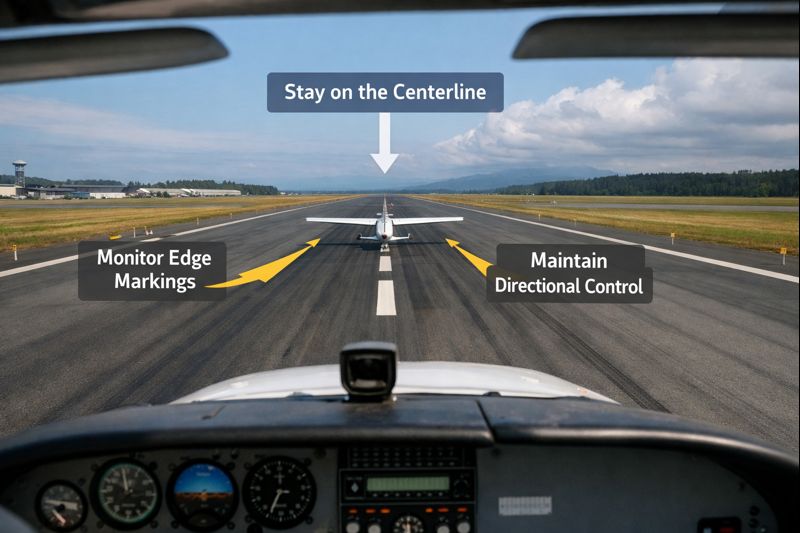
Introduction
Runway markings give pilots critical visual cues, but they’re only part of the picture. At many airports — especially at night, in low visibility, or on complex airfields — signs and lighting become just as important for safe operations.
If you’re still learning runway markings and pavement cues, start with our complete runway markings visual guide for student pilots. This article focuses on how runway signs and airport lighting help you maintain situational awareness during taxi, takeoff, and landing.
When paint isn’t enough
In ideal daytime conditions, runway markings are easy to see. But student pilots quickly discover that:
- markings can be faded
- runways can look similar
- lighting conditions can change rapidly
Runway signs and lighting exist to confirm what you’re seeing and prevent errors — particularly during ground operations and night flying.
Runway signs vs taxiway signs (the big difference)
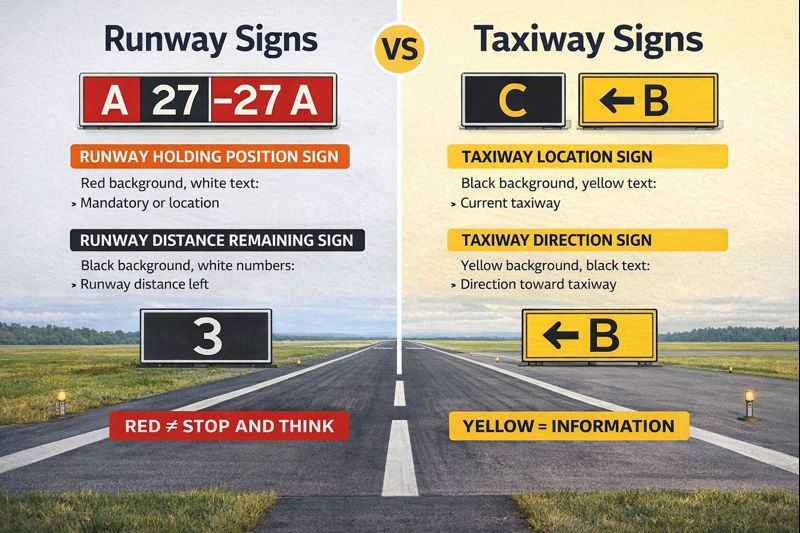
One of the most common student pilot challenges is telling runway signs apart from taxiway signs.
Colour is your first clue
- Red background with white text → runway location or mandatory instruction
- Yellow background with black text → taxiway direction or location
- Black background with white numbers → runway distance remaining
If a sign has a red background, treat it as a stop-and-think sign, not just information.
Mandatory signs and hold short awareness
Mandatory instruction signs are directly linked to runway safety.
Runway holding position signs
These signs:
- identify the runway you’re about to enter
- appear before runway intersections
- work together with hold short pavement markings
When you see a red runway sign:
- stop unless cleared
- verify runway and direction
- confirm clearance verbally if unsure
👉 If you’re unfamiliar with the associated pavement markings, we explain them in detail in our runway markings visual guide.
Runway lighting basics every student pilot should know
Airport lighting provides orientation, confirmation, and reassurance, especially at night.
Runway edge lights
- White lights outline the usable runway
- They help confirm runway width and alignment
- They become critical during flare and rollout
Threshold and runway end lights
- Threshold lights indicate the start of landing distance
- Runway end lights warn of pavement limits
- They are especially helpful on unfamiliar runways
Centerline lighting (intro only)
Some larger runways use centerline lights to help maintain alignment in low visibility. Student pilots don’t need to master these early, but recognising them is useful.
Using lighting during approach and landing
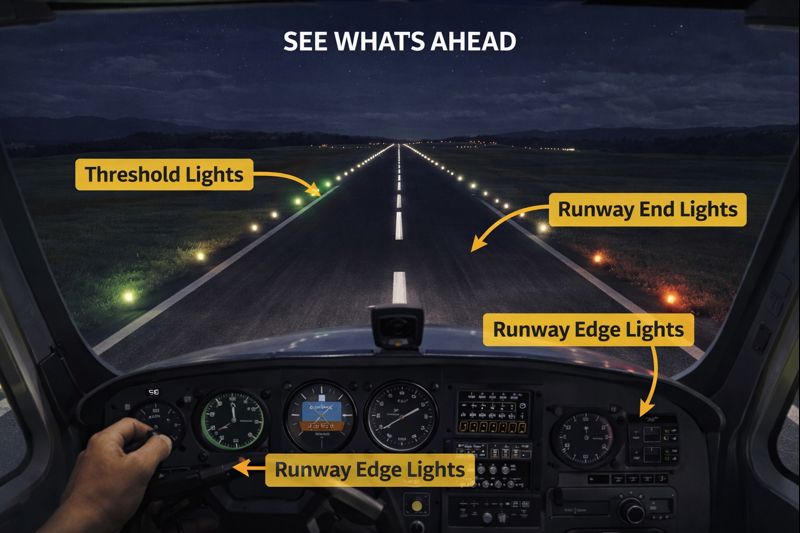
Lighting becomes a primary visual reference during night operations.
Confirming runway alignment
On final approach:
- runway lights form a clear visual corridor
- threshold lights help confirm correct runway selection
- consistent light spacing supports stable alignment
👉 This visual confirmation works together with the techniques we explain in our guide on how student pilots use runway markings visual guide..
Taxiway lighting and ground navigation
Taxi operations deserve just as much attention as flight phases.
Taxiway edge and centerline lights
- Blue lights mark taxiway edges
- Green lights mark taxiway centerlines
- These cues prevent drifting and wrong turns at night
Good taxi discipline reduces the risk of runway incursions — one of the most serious hazards in aviation.
Common student pilot mistakes with signs and lighting
Many early mistakes are predictable:
- confusing runway location signs with taxiway direction signs
- entering a runway without positive identification
- relying on GPS instead of visual confirmation
- misidentifying taxiways at night
Recognising these patterns early helps you slow down and verify before acting.
How instructors expect you to use signs and lighting
Instructors aren’t looking for memorisation — they’re looking for awareness.
They expect you to:
- verbally acknowledge signs
- cross-check lighting with charts and markings
- keep your head up during taxi
- pause and verify when unsure
Deliberate, unhurried ground operations signal good judgement.
Bringing it all together
Runway markings, signs, and lighting work together to create a complete visual picture. When one cue is unclear, the others help confirm your position and intentions.
Developing this layered awareness early builds confidence and reduces workload as your training progresses.
👉 For a full reference covering runway markings, signs, and visual cues, see our complete runway markings visual guide..