Passive vs. Active: Which Noise Reduction is Right for Your Cockpit?
Choosing your first headset is the most significant gear decision you’ll make as a pilot. In 2026, the market is split between two main technologies: Passive Noise Reduction (PNR) and Active Noise Reduction (ANR). While professional-grade units can top $1,300, the sub-$500 category is the “sweet spot” for students and weekend warriors who need reliability without the “aviation tax.”
Understanding the Tech: PNR vs. ANR
Before looking at models, you need to know what your ears are up against. Piston-engine cockpits regularly hit 90–105 decibels.
- Passive (PNR): Think of these like high-end earmuffs. They use heavy-duty foam, gel seals, and physical “clamping force” to block sound. They are bulletproof, require no batteries, but can feel heavy after a long flight.
- Active (ANR): These headsets use a microphone to “listen” to the engine rumble and then create an opposite sound wave to cancel it out. They are much quieter and more comfortable but require batteries and are generally more expensive.
Top Picks: Passive Headsets (Rugged & Reliable)
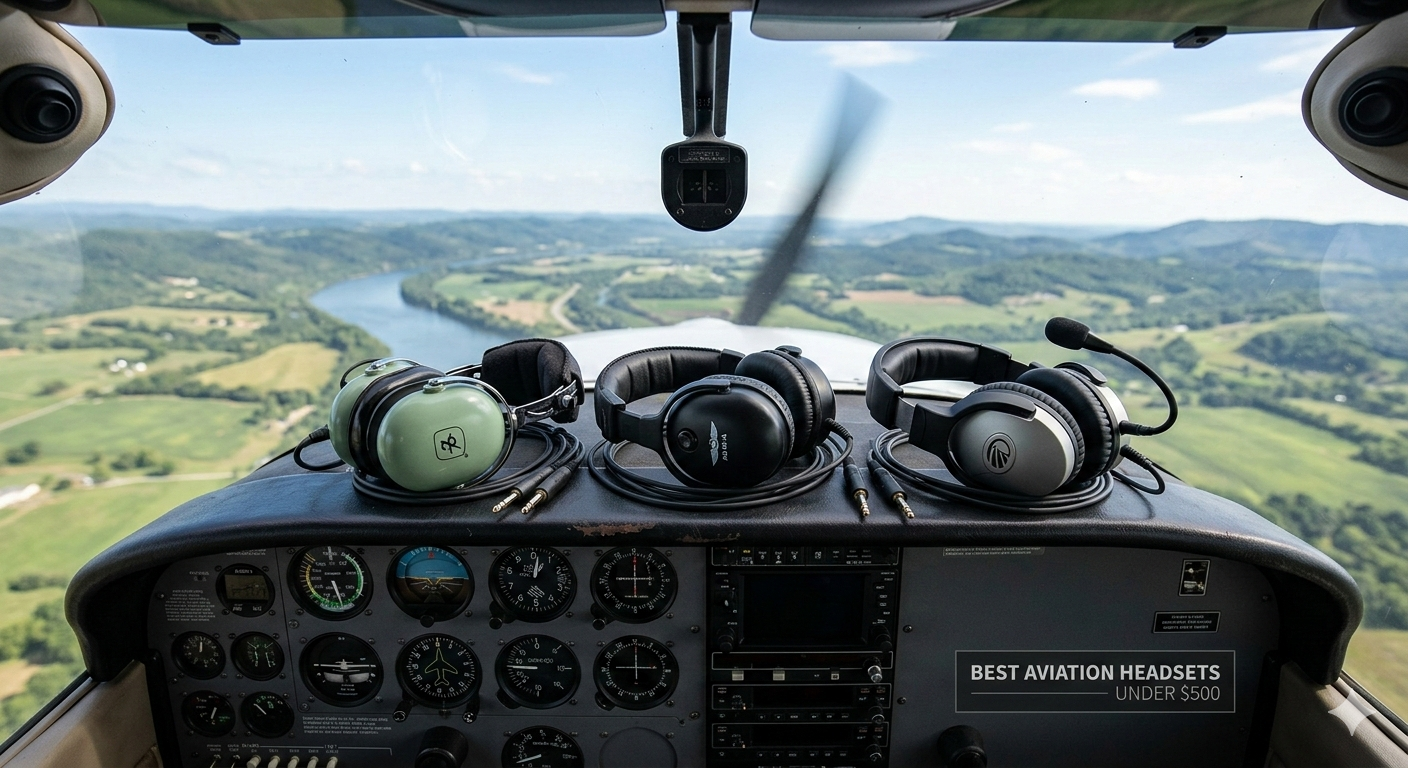
1. David Clark H10-13.4 ($365 – $395)
The “Green Domes” are a legend for a reason. If you walk into any flight school in the world, you will see a pair of these that is 20 years old and still working.
- The Good: Incredible resale value and legendary durability. They are TSO-certified (approved for airline/commercial use) and made in the USA.
- The Bad: They use a high “clamping force” to keep the noise out, which can lead to “hot spots” on your head during long cross-country flights.
- Best For: The student who wants a headset that will literally last their entire career.

- Bundle Savings: This headset comes bundled with a Single Headset Bag providing exceptional value
- Comfort Features: Super-soft double-foam headpad and undercut gel ear seals provide exceptional comfort during long flig…
- Noise Reduction: Features impressive passive noise reduction rating of 23 dB for enhanced audio clarity
2. Kore Aviation KA-1 ($220)
Kore has dominated the budget market recently by offering features usually found in $400 headsets.
- The Good: It comes with high-quality silicone gel seals (standard), dual volume controls, and a custom carrying bag.
- The Bad: The build quality uses more plastic than David Clark, so it might not survive being stepped on in a hangar.
- Best For: The price-conscious student who wants maximum comfort for the lowest price.
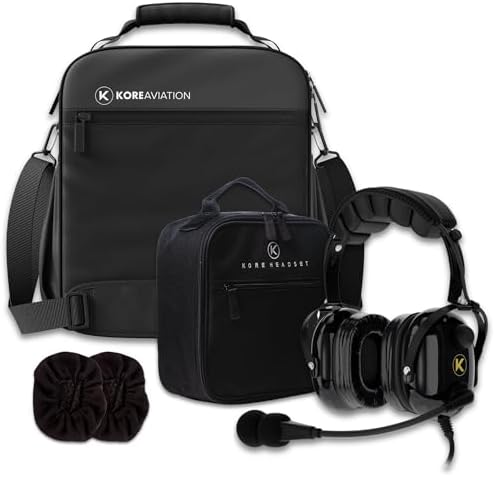
- SUPERIOR AUDIO CLARITY – Featuring a premier noise reduction rating (NRR) of 24db and stereo sound output, this aviation…
- COMFORTABLE AND DURABLE DESIGN – Designed for extended wear during long flights that can withstand the rigors of regular…
- HIGH-QUALITY MICROPHONE – Equipped with an electret noise-canceling microphone with preamp on 360° flex boom, ensuring y…
Top Picks: Active Noise Reduction (The Budget ANR)
3. Faro G2 ANR ($389)
Faro was one of the first companies to bring reliable electronic noise canceling under the $400 mark.
- The Good: It offers 23–26 dB of active cancellation. This significantly reduces pilot fatigue, making it much easier to hear Air Traffic Control (ATC) over the engine roar.
- The Bad: If the batteries die, the passive protection is only average. You must carry spares!
- Best For: Pilots flying loud, older trainers like the Cessna 150 or Piper Cherokee.

- Premium Pleather Ear Protection offers up to an incredible 52db of Noise Reduction with Active noise compression technol…
- MP3/Radio/iPod/iPad Compatible
- Pilot Headset engineered in the United States
4. Pilot USA Pro Max ANR with Bluetooth ($449)
This is the “tech-heavy” choice. It is one of the few headsets in this price bracket that includes integrated Bluetooth.
- The Good: You can wirelessly connect your iPad (ForeFlight) or phone. This allows you to hear terrain warnings, traffic alerts, or even a phone call directly in your ears.
- The Bad: The interface can be a bit fiddly with gloves on.
- Best For: Tech-savvy students who want modern connectivity on a budget.
The Ultra-Budget Category (Under $150)
If you are just starting your first five hours of lessons, or you need a “spare” headset for a passenger, you don’t need to break the bank.
| Model | Price | Key Feature |
| Rugged Air RA200 | ~$95 | The cheapest functional flight headset on the market. |
| ASA HS-1A | ~$145 | Extremely common in flight schools; very easy to repair. |
| Kore Aviation P1 | ~$125 | Includes a carrying bag and a decent 5-year warranty. |
4 Things to Check Before You Buy
- The “Sunglass Seal”: If you wear thick-framed sunglasses, they can break the seal of your ear cups, letting noise leak in. Look for gel seals—they “wrap” around the glasses better than foam.
- Mono vs. Stereo: Most training planes are “Mono.” Make sure your headset has a switch to toggle between the two; otherwise, you might only hear audio in one ear.
- TSO Certification: If you plan on flying for a major airline or a high-end charter company, they may require “TSO-certified” gear. Most budget headsets are not TSO-certified, though they are perfectly legal for general aviation.
- Weight: A 20oz headset doesn’t feel heavy in the store, but after 3 hours of “touch-and-go” landings, your neck will feel the difference. Aim for something under 16oz if possible.
Maintenance: Making it Last
A $300 investment can last a decade if you do two things:
- Swap the “Soft Goods”: Every 18–24 months, buy a “refresher kit.” New ear seals and a fresh microphone muff will make an old headset feel (and smell) brand new.
- Protect the Mic: The microphone is the most sensitive part. Always use a foam “muff” to prevent moisture from your breath from corroding the internal electronics.
Final Verdict: What should you buy?
If you have $250 and want the best value: Get the Kore Aviation KA-1.
If you have $400 and want the most peace and quiet: Get the Faro G2 ANR.
If you have $400 and want indestructible reliability: Get the David Clark H10-13.4.
Conversational FAQ
Should I buy a mono or stereo headset for my first flight? Most training aircraft use mono audio systems, but buying a headset with a mono/stereo switch (like the Kore KA-1 or DC H10-13.4) is wise. This ensures compatibility if you move to a more modern aircraft or want to listen to music in stereo during a long cross-country flight.
Is Active Noise Reduction (ANR) dangerous because I can’t hear the engine? No. ANR is specifically designed to cancel out low-frequency background noise while allowing higher-pitched sounds—like stall warnings, engine pitch changes, and voices—to come through clearly. Many pilots report that they can actually hear engine nuances better with ANR because the overwhelming “roar” is removed.
Do I really need to spend $300+? What about a $100 headset? A $100 headset like the Rugged Air RA200 is perfectly functional for learning to fly and is often used by flight schools. However, the additional $200 for a mid-range model typically buys you significant improvements in comfort, audio clarity, and long-term durability.
What happens if the batteries die on my ANR headset during a flight? All aviation ANR headsets are designed to function as passive headsets if the batteries fail. You will notice an immediate increase in noise, but you will still be able to hear the radio and communicate with your instructor. Carrying a spare set of AA batteries in your flight bag is a standard pilot practice.
Usefull Links
- Best Aviation Headsets 2025 – David Clark vs Lightspeed vs Bose – American Flyers, accessed on February 28, 2026, https://americanflyers.com/looking-for-a-new-aviation-headset/
- Technical Standard Orders (TSO) – Federal Aviation Administration, accessed on February 28, 2026, https://www.faa.gov/aircraft/air_cert/design_approvals/tso
- Best Aviation Headsets 2021 – Pilot Headset Buying Guide – FlyGA, accessed on February 28, 2026, https://fly-ga.co.uk/best-aviation-headsets-review-guide/
- Best Aviation Headset for Student Pilots, accessed on February 28, 2026, https://www.koreheadset.com/collections/bestaviationheadsetforstudentpilots
- Listen up – AOPA, accessed on February 28, 2026, https://www.aopa.org/news-and-media/all-news/2021/november/flight-training-magazine/listen-up
- Sporty’s Pilot Shop Specials, accessed on February 28, 2026, https://www.sportys.com/pilot-shop-specials.html?page=4