Aviation Communication and Radio Operations: A Complete Pilot Guide
Effective communication in the cockpit is one of the cornerstones of safe and efficient flight. Whether you’re using a modern avionics radio system or a legacy airplane radio, understanding how aviation communication works is critical for every pilot. This guide explains VFR communications, squawk codes, and Mayday calls, while also introducing real-world aviation com radio procedures used between pilots and air traffic control (ATC).
Understanding VFR (Visual Flight Rules)
Visual Flight Rules (VFR) allow pilots to operate an aircraft using visual cues like the horizon, roads, and terrain for navigation, rather than relying entirely on instrument readings. Under VFR operations, pilots can fly safely in good weather conditions with sufficient visibility to “see and avoid” obstacles or other radio planes in the sky.

- FIVE STAR COMFORT: Embark for every journey sporting maximum comfort. Our over the ear headphones are constructed for a …
- FIVE BY FIVE COMMS: We understand reliable communication is key for safety. Our noise canceling headset with a microphon…
- EXCEPTIONAL QUALITY: Invest in your future. Aviation headsets for pilots are essential aviation tools that should be bui…
As an Amazon Associate, AviatorFinds earns from qualifying purchases.
Flying under VFR enhances situational awareness: pilots maintain eyes-out scanning, interpret the environment, and interact directly with ATC using aviation radio calls when operating near controlled airspace. Pilots transition to IFR (Instrument Flight Rules) when cloud layers or poor weather reduce visibility beyond legal VFR limits — requiring ATC-approved routing and reliance on the radio in aircraft navigation systems linked to radar and GPS databases.
How Pilots Communicate with ATC
All pilot communications are made through the avionics radio panel, typically operating on VHF communication frequencies (118.000–136.975 MHz). Standardized phraseology avoids confusion, ensuring that both pilots and controllers interpret transmissions precisely the same way.
Common Aviation Radio Terms and Phrases
- Holding Short: Waiting at a runway threshold (e.g., “Cessna 45B, holding short of Runway 27 Left”).
- Cleared for Takeoff: ATC approval to begin the takeoff roll (“Cleared for takeoff, Runway 27 Left”).
- Request Flight Following: Asking ATC to monitor your flight for traffic advisories under VFR conditions.
- Roger: Message received and understood.
- Wilco: Will comply with instruction.
- Say Again: Request to repeat transmission.
Sample Pilot–Tower Conversation
Pilot: Tamiami Tower, Cessna 172 N123AB, holding short Runway 9 Right, ready for departure.
Tower: N123AB, cleared for takeoff Runway 9 Right, fly runway heading.
Pilot: Cleared for takeoff 9 Right, N123AB.
During cruise, the pilot may contact Approach Control via aviation com radio:
Miamii Approach, Cessna 172 N123AB, level 5,500 feet, request VFR flight following to Tampa.
Such precise phraseology minimizes misunderstanding, especially in busy airspace where dozens of aircraft transmit over the same aviation radio frequencies.
Decoding Squawk Codes
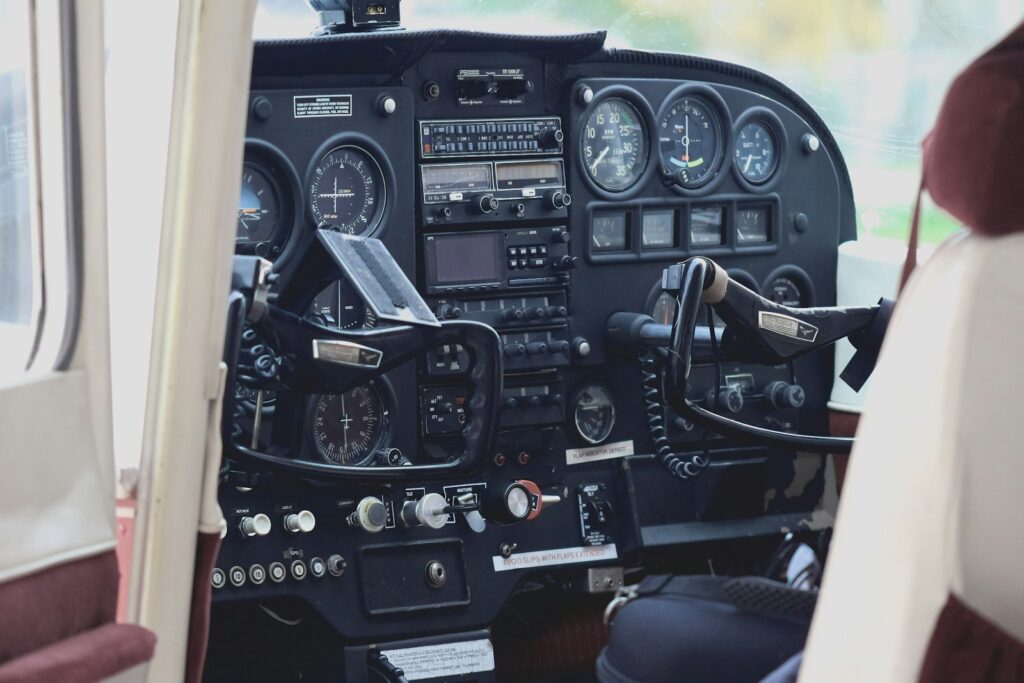
A squawk code is a four-digit identifier used by ATC radar to track and recognize specific aircraft. Pilots set the code on their avionics radio transponder panel, allowing radar systems to display altitude, position, and flight status instantly.
Commonly used squawk codes include:
- 1200: VFR flight in uncontrolled airspace
- 7700: General emergency
- 7600: Radio communication failure
- 7500: Hijacking
By assigning distinct codes, ATC can monitor traffic efficiently and pinpoint emergencies with precision — a key advantage of integrating radio in aircraft systems with radar surveillance networks.
Mayday Calls: Emergency Aviation Communication
The term “Mayday” comes from the French m’aider (“help me”) and is reserved for life-threatening emergencies. When a pilot uses an aviation com radio to issue a mayday, ATC instantly prioritizes the aircraft.
The standard call format:
Mayday, Mayday, Mayday, Cessna 172 N123AB, engine failure, five miles east of Orlando, 2,500 feet, attempting emergency landing in field, request assistance.
If the situation is less critical, pilots may use Pan-Pan to indicate urgency without immediate danger. Knowing when and how to declare an emergency is a central skill in aviation communication training.
Aviation Communication Equipment and Avionics Radios
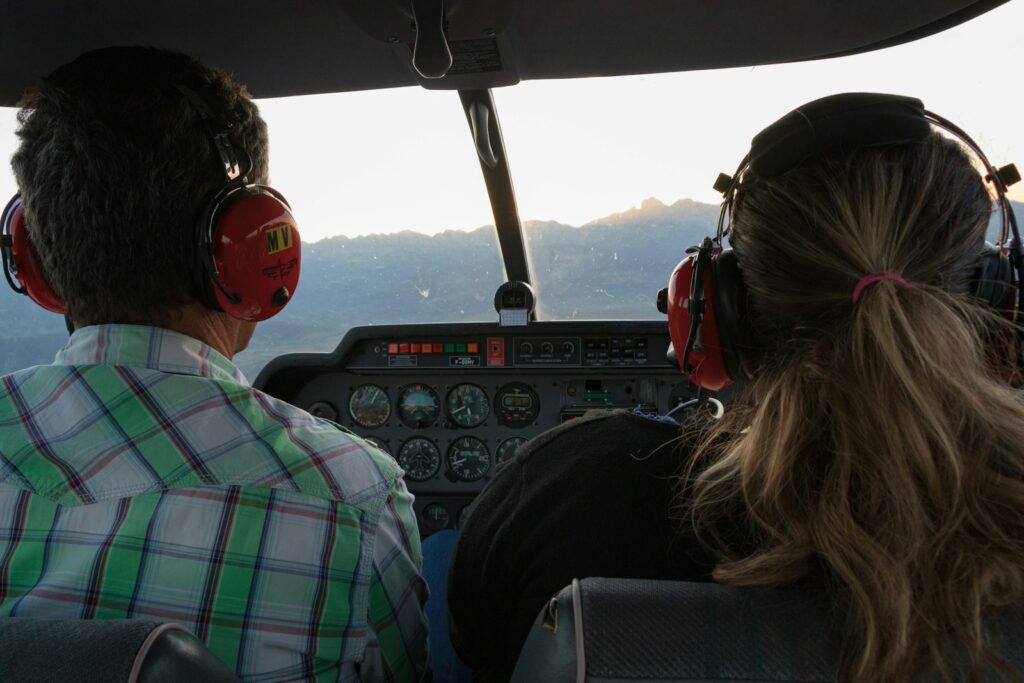
Modern aircraft come equipped with advanced avionics radios that integrate navigation, automation, and audio systems into the aircraft’s electronic suite. Popular radio manufacturers — such as Garmin and BendixKing — produce compact multi-function panels combining communication and navigation radios.
Essential radio components include:
- COM radios: Used for all external voice communications.
- NAV radios: Receive direction and distance signals from ground-based navigation aids.
- Transponders: Send squawk data for ATC radar identification.
- Intercom systems: Enable cockpit crew communication and headset integration.
Upgrading an aviation radio system enhances both safety and clarity by adding digital encoding, noise cancellation, and automatic frequency selection. Many pilots retrofit older aircraft with new Bluetooth-enabled airplane radios for seamless audio performance and hands-free chart connectivity — a growing trend among general aviation pilots looking to modernize older radio planes.
Quick Reference Table: Aviation Radio Terms
| Term | Meaning | Example |
|---|---|---|
| Wilco | “Will comply” | Wilco, maintain 3,000 feet, N123AB |
| Say again | Repeat message | Say again, last transmission |
| Cleared to land | Authorization for landing | Cleared to land Runway 24, N123AB |
| Request flight following | Request ATC monitoring | Request flight following to Key West |
| Mayday | Distress call | Mayday, engine failure |
Why Aviation Radio Mastery Matters
Clear communication through an aircraft’s radio in aircraft isn’t just convenience — it’s safety in action. Mastery of ATC phraseology, squawk code operation, and aviation com radio discipline keeps air traffic organized, reduces midair collision risk, and ensures rapid emergency response.
From local training flights to international operations, pilots rely on avionics radio systems every time they push the throttle forward. As aviation evolves, the radio plane remains one of humankind’s most dependable lifelines in the sky.
👉 If you’re new to aviation and want to see where most pilots start their journey, check out our guide on the Cessna 172 — The World’s Most Popular Training Aircraft. It’s a perfect introduction to general aviation and the aircraft that’s helped more people earn their wings than any other.
📎 Related Reading
🛫 Cessna 172 Skyhawk — The Complete History and Pilot’s Guide